The food at a Korean restaurant is the easy part. It’s the little rituals around it — calling the server, the surprise plates, paying — that make first-timers freeze. None of it is hard once someone explains it, so here’s that explainer.
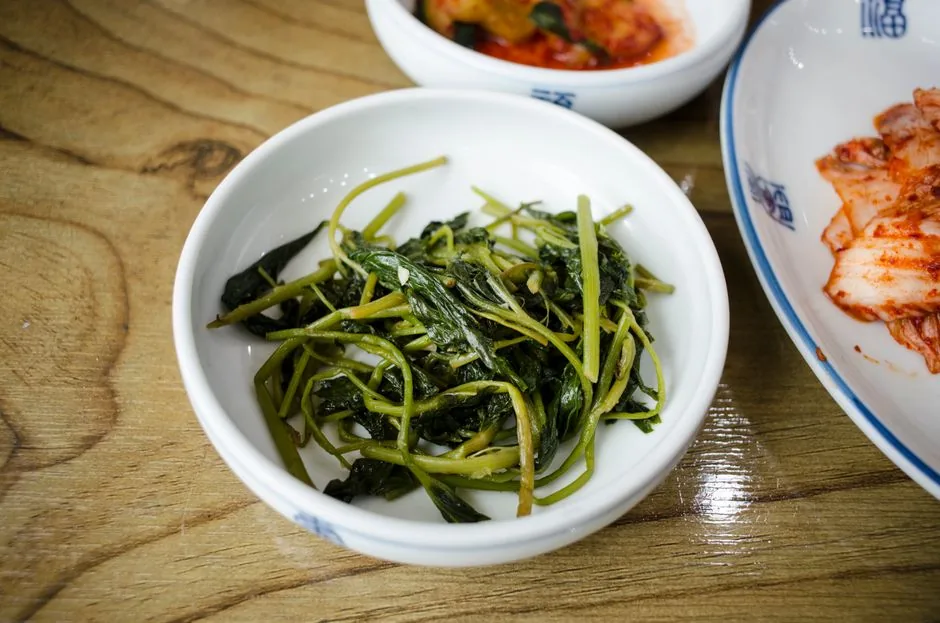
The free plates aren’t a mistake
Soon after you sit, a bunch of small dishes show up that you didn’t order: kimchi, seasoned vegetables, maybe pickled radish. These are banchan, and they’re free side dishes that come with the meal. Even better, they’re usually refillable for free — if you love one, you can ask for more. Don’t be shy about it; asking for a refill on the braised potatoes is completely normal, and I do it basically every time.
How to call the server
In Korea you don’t wait to be checked on. You call the staff over when you’re ready. Many tables have a literal call button — press it and someone comes. If there’s no button, a friendly “yogiyo!” (여기요, “over here”) is completely normal and polite. Flagging someone down isn’t rude here; it’s the system.
Water is often self-serve too — look for a dispenser and cups near the counter, or a kettle and cups already on the table.
Ordering tips that save you
Portions are built for sharing, and many dishes — stews, BBQ, jjim — are listed for two or more. If you’re solo, look for one-person sets (often marked) or single-bowl dishes like bibimbap, gukbap, or kalguksu.
If spice worries you, you can ask for a dish “deol maewo” (덜 매워, “less spicy”) — staff hear it all the time. And ordering one rice and sharing the rest is normal; Korean meals are communal by default.
Paying — at the counter, no tip
Here’s the one that surprises people most. In most casual Korean places you don’t pay at the table. You take your receipt or just remember your table, walk to the counter by the door, and pay there on the way out.
And don’t tip. Tipping isn’t part of Korean restaurant culture — service is included, and leaving cash usually just confuses the staff. Honestly, the staff would rather you just come back. (See our Korean BBQ guide for the same rule at the grill.)
A calm first visit
Sit, let the banchan arrive, press the button or call “yogiyo,” order something for the table plus a rice, ask for it milder if you want, and pay at the counter on your way out. That’s the whole loop. Do it once and it stops feeling foreign.
The table, and a few phrases that help
Sit down and you’ll notice the setup is a little different. Chopsticks are usually flat metal ones, paired with a long spoon you’ll use for rice and stew — they slide differently from wooden chopsticks, so give yourself a beat. Utensils and napkins often live in a drawer on the side of the table, so check there before you flag anyone down. Water is commonly self-serve from a dispenser, or a kettle and cups already sit on the table.
A handful of phrases carry you through almost any meal:
- “Yogiyo!” (여기요) — “over here,” to call the staff.
- “Igeo juseyo” (이거 주세요) — “this one, please,” while pointing at the menu.
- “Deol maewo juseyo” (덜 매워 주세요) — “less spicy, please.”
- “Mul juseyo” (물 주세요) — “water, please.”
- “Mat-isseoyo” (맛있어요) — “it’s delicious,” always welcome.
On splitting the bill: the old custom was for one person to treat and someone else to grab the next round, but dutch pay (splitting) is completely normal now, especially among younger people. At the counter you can ask to pay separately, or just send one card and settle up between yourselves afterward.
None of this needs memorizing before you go. Sit, let the banchan land, point at what looks good, ask for it milder if you want, and pay on the way out. Run that loop once and the whole thing stops feeling foreign — you’ll be the one explaining the call button to the next nervous first-timer.
🙋 Speaking from experience
Two things nobody told me on my early visits, so I’ll tell you. First, the little call button on the table isn’t rude — it’s the expected way to get the staff’s attention, and I spent an embarrassing few minutes once half-raising my hand and making eye contact like I was bidding at an auction. Press the button; that’s what it’s for. Second, the banchan (side dishes) are usually free refills — I genuinely didn’t know and rationed my kimchi like it was billed per plate. Ask for more; they’ll bring it, no charge. Small things, but they turn a stiff first visit into a relaxed one.
FAQ
How do I get the server’s attention? Press the call button on your table, or say “yogiyo” (여기요). Flagging staff down is normal and polite in Korea.
Do I tip at Korean restaurants? No. Tipping isn’t part of Korean dining culture, and you usually pay at the counter by the door, not at the table.
Are the free side dishes really free and refillable? Yes — banchan come with the meal at no charge and are typically refilled for free if you ask.
Can I eat at a Korean restaurant alone? Yes. Look for single-portion sets or one-bowl dishes like bibimbap, gukbap, or kalguksu — they’re made for solo diners, even at places where stews are listed for two or more.
Not sure what to actually order? Start with Korean food for beginners.
About the author — Jae is a Seoul-based writer at K-Culture Log, helping newcomers get into Korean culture without the overwhelm.