Korean food gets talked about for its spice and its BBQ, but the dessert scene quietly went global, and in 2026 it’s one of the fastest-growing corners of the whole wave. Sweet, chewy, icy, deep-fried — there’s a Korean dessert for every mood. Here’s where to start.
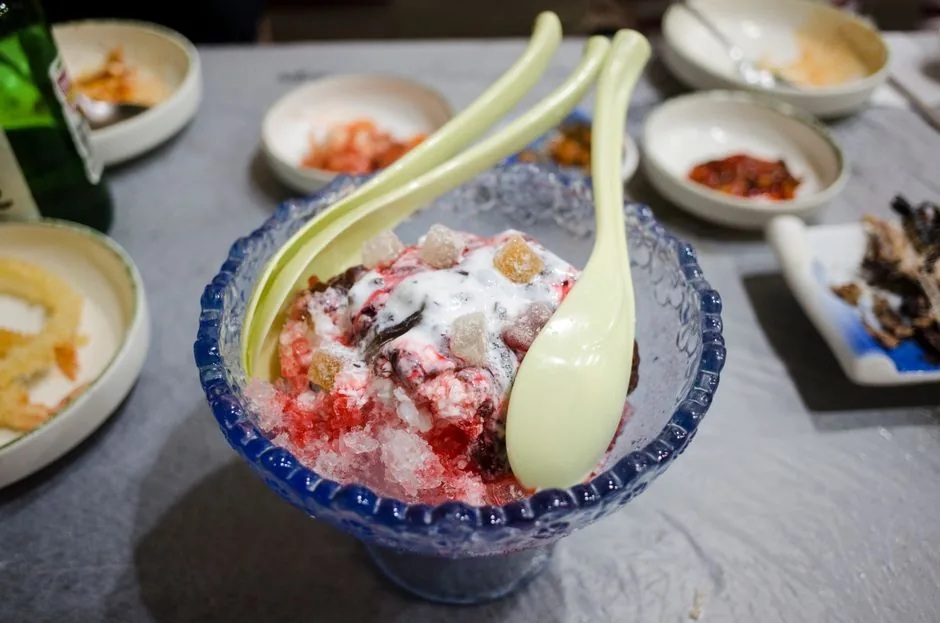
The icon: bingsu
If you try one Korean dessert, make it bingsu. It’s a mountain of finely shaved milk-ice, soft as snow, piled with toppings. The classic is patbingsu, crowned with sweet red bean and chewy rice cakes, but cafes now build them around mango, strawberry, injeolmi (toasted soybean powder), or even cheesecake. It’s huge — genuinely meant to be shared by two or three people — and it’s the summer dessert in Korea. Don’t be shy about ordering the big one for the table.
Warm and street-side
When it’s cold, the sweets get warm. Hotteok is the headliner: a chewy pancake fried until crisp, filled with molten brown sugar, cinnamon, and crushed nuts. Bungeoppang, a fish-shaped pastry filled with sweet red bean (or custard, increasingly), has crispy edges and a soft middle. And gyeran-ppang, “egg bread,” is a small sweet-savory loaf baked with a whole egg inside — half dessert, half breakfast. All three are cheap, sold from carts, and best eaten on the spot. The first time I had hotteok at a winter market I burned my tongue immediately and didn’t care at all — that’s the right way to do it.
Traditional sweets, making a comeback
Here’s a 2026 storyline worth knowing: Korea’s old-school sweets are having a real revival. Yakgwa, a chewy honey-and-sesame-oil cookie that used to read as something your grandmother served, is suddenly trendy, popping up in cafes in glossy new forms. Injeolmi (soft rice cake dusted in nutty soybean powder) and yanggaeng (a firm sweet red-bean jelly) are riding the same wave. If you want a taste of Korea that isn’t built for Instagram, start here — though plenty of these now look gorgeous too.
The 2026 cafe wave
Korea’s cafe culture moves fast, and the trends turn over constantly. The croffle — a croissant pressed in a waffle iron until shatteringly crisp — is everywhere and shows no sign of slowing. Globally viral sweets like Dubai-style chocolate have been folded into Korean cafe menus, and seasonal flavors rotate so quickly that half the fun is just seeing what a neighborhood cafe dreamed up this month. The throughline: Korean dessert culture loves texture and novelty, so expect chewy, crunchy, and unexpected.
Where to find them
Bingsu and the cafe trends live in dessert cafes, which are on practically every block in Korean cities. Warm street sweets cluster around traditional markets and the orange pojangmacha tents, especially in colder months. Traditional sweets show up in both — old-style tea houses and shiny modern cafes alike. Bring a little cash for the street stalls; cafes take cards.
You don’t have to like everything. Start with bingsu in summer or hotteok in winter, follow your sweet tooth from there, and leave room — Korean desserts are easy to underestimate until the first bite.
Bingsu, decoded: how to order one
Since bingsu is the dessert most worth your first try, a quick decoder. Sizes are usually generous — a “regular” is often enough for two people, and a “large” can feed three or four, so order one to share rather than one each. Flavors split into a few families: patbingsu (red bean, the classic), fruit bingsu (mango and strawberry lead), injeolmi (nutty toasted-soybean, very Korean), and dessert mash-ups like tiramisu or cheesecake bingsu in trendier cafes.
A couple of practical notes. The ice melts, so dig in reasonably soon and mix the toppings down through the snow as you go — it’s meant to be stirred, not eaten layer by layer. Prices vary a lot by cafe, from modest to surprisingly premium at specialty spots, so glance at the menu first if you’re budgeting. And if red bean isn’t your thing, a fruit or injeolmi bingsu is the easy crowd-pleaser; almost no one dislikes the mango one.
If you remember nothing else: order one big bowl for the table, grab extra spoons, and don’t let it sit — bingsu waits for no one.
FAQ
What is bingsu? Bingsu is a Korean shaved-ice dessert: finely shaved milk-ice piled with toppings like sweet red bean, fruit, or condensed milk, usually large enough to share.
Are Korean desserts very sweet? Less than you might expect. Many lean on red bean, rice cake, and nutty flavors that are mild and not cloying, though cafe trends can be richer.
What’s a good Korean dessert for a first try? Bingsu in warm weather or hotteok when it’s cold — both are crowd-pleasers and easy to find.
Are traditional Korean sweets worth trying? Yes — yakgwa, injeolmi, and yanggaeng are having a 2026 revival and offer a more authentic, less sugary side of Korean dessert culture.
Hungry for more? Start with Korean food for beginners or the Korean street food guide.
About the author — Jae is a Seoul-based writer at K-Culture Log, helping newcomers get into Korean culture without the overwhelm.